God Loves
  • Home
  • prophecies
  • Heaven
  • Hell
  • Born Again
  • Rapture
  • Left Behind
  • Learning to Love
  • Jesus
  • God Calendar
  • The Bible timeline
  • Armor of God
  • CREATION VS EVOLUTION
  • Anti-Christ
  • Bible Study
  • HUMOR
God made Hell for the devil and the fallen angels but not for humans.  Humans are born destined already for hell after Adam disobeyed God.  A loving God will never send human to Hell unless human choose it by being on the side of the devil and fallen angels.  Only humans has a salvation from God to avoid HELL which probably evoke a great jealousy from the devil and his fallen angels because they did not have any chance to salvation except us humans. So, they will do everything they could to let us go back to God.

We will explore the following topics here on hell.​
- What the Bible says about Hell
- Hell (described from various people)
- Believers of Christ in Hell. 
WHO GOES TO HELL FIRST?
- Hell described throughout human history

​
"If live men know what dead men know, the whole world would be Born Again Christians."  
    (Don Blackwell, World Video Bible School)


For what shall it profit a man, if he shall gain the whole world, and lose his own soul? 
    Mark 8:36 (KJV)

​
Picture
What the Bible Says About Hell

Key Facts About Eternity
(1) Everyone will exist eternally either in heaven or hell (Daniel 12:2,3; Matthew 25:46; John 5:28; Revelation 20:14,15).
(2) Everyone has only one life in which to determine their destiny (Hebrews 9:27).
(3) Heaven or hell is determined by whether a person believes (puts their trust) in Christ alone to save them (John 3:16, 36, etc.).

Key Passages About Hell
(1) Hell was designed originally for Satan and his demons (Matthew 25:41; Revelation 20:10).
(2) Hell will also punish the sin of those who reject Christ (Matthew 13:41,50; Revelation 20:11-15; 21:8).
(3) Hell is conscious torment.
  • Matthew 13:50 “furnace of fire…weeping and gnashing of teeth”
  • Mark 9:48 “where their worm does not die, and the fire is not quenched”
  • Revelation 14:10 “he will be tormented with fire and brimstone”
(4) Hell is eternal and irreversible.
  • Revelation 14:11 “the smoke of their torment goes up forever and ever and they have no rest day and night”
  • Revelation 20:14 “This is the second death, the lake of fire”
  • Revelation 20:15 “If anyone’s name was not found written in the book of life, he was thrown into the lake of fire”

Erroneous Views of Hell
(1) The second chance view – After death there is still a way to escape hell.
  • Answer: “It is appointed unto men once to die and after that the judgment” (Hebrews 9:27).
(2) Universalism – All are eternally saved.
  • Answer: It denies the truth of salvation through Christ which means that a person decides to either trust in Christ or else he/she rejects Christ and goes to hell (John 3:16;3:36).
(3) Annihilationism – Hell means a person dies like an animal – ceases to exist.
  • Answer: It denies the resurrection of the unsaved (John 5:28, etc. – see above). It denies conscious torment (see above).

Objections to the Biblical View of Hell
(1) A loving God would not send people to a horrible hell.
  • Response: God is just (Romans 2:11).
  • God has provided the way of salvation to all (John 3:16,17; 2 Corinthians 5:14,15; 1 Timothy 2:6; 4:10; Titus 2:11; 2 Peter 3:9).
  • Even those who haven’t heard of Christ are accountable for God’s revelation in nature (Romans 1:20). God will seek those who seek Him (Matthew 7:7; Luke 19:10).
  • Therefore God doesn’t send people to hell, they choose it (Romans 1:18,21,25).
(2) Hell is too severe a punishment for man’s sin.
  • Response: God is holy-perfect (1 Peter 1:14,15).
  • Sin is willful opposition to God our creator (Romans 1:18-32).
  • Our sin does merit hell (Romans 1:32; 2:2,5,6).
  • What is unfair and amazing is that Christ died for our sin and freely offers salvation to all (Romans 2:4; 3:22-24; 4:7,8; 5:8,9).

Biblical Terms Describing Where the Dead Are
  • Sheol - a Hebrew term simply describing “the grave” or “death” – Does not refer to “hell” specifically
  • Hades - A Greek term that usually refers to hell – a place of torment (Luke 10:15; 16:23, etc.)
  • Gehenna - A Greek term (borrowed from a literal burning dump near Jerusalem) that always refers to hell – a place of torment (Matthew 5:30; 23:33)
  • “Lake of fire”- the final abode of unbelievers after they are resurrected (Revelation 20:14,15)
  • “Abraham’s bosom” - (Luke 16:22) a place of eternal comfort
  • “Paradise” - (Luke 23:43) a place of eternal comfort
  • “With the Lord” - a key phrase describes where church age believers are after death (Philippians 1:23; 1 Thessalonians 4:17; 2 Corinthians 5:8)
  • “New heavens and earth” – where believers will be after they are resurrected (Revelation 20:4-6; 21:1-4)

Picture
HELL

Many shy away from talking about hell.  Remember that the same God that create The Heavens and The Earth is also the same God that created Hell.  Someone once described Hell as being the Waste Incinerator of God where He disposes of His rejects.

We are all born to die and go to hell if nothing is done. God never send us to hell but we are already on our way to hell if nothing is done because those born from Adam after he sinned against God.

Before we go further, we explore the total anatomy of a human which is physical body and soul.  
We are born spiritually dead with a body and a soul. 
The body is born to die physically and the soul is born to eternally separated from God if nothing is done.

Picture
Original Adam consists of Spirit+Soul+Body
Picture
Adam after breaking God's Law = Soul+Body

Everyone born after the contaminated seed of Adam is in this category. Literally born to die.  This means body will die and degrade while the soul will go on to the Incinerator of God called HELL.
The above video is taken from a CCTV Hospital Morgue 24 hour security camera recording. This one showed the soul left the body and flew away from it.
Psalms 90:10 (NIV)
Our days may come to seventy years,or eighty, if our strength endures; yet the best of them are but trouble and sorrow, for they quickly pass, and we fly away.

​Psalms 90:10 (KJV)
The days of our years are threescore years and ten; and if by reason of strength they be fourscore years, yet is their strength labour and sorrow; for it is soon cut off, and we fly away.

Psalms 90:10 (Septuagint)
As for the days of our years, in them are seventy years; and if men should be in strength, eighty years: and the greater part of them would be labour and trouble; for weakness overtakes us, and we shall be chastened.


​Jesus talks more about hell than heaven to us in the Bible.  Currently, hell is below us which is in the core of earth magma. However, the reality of hell has been silenced by demonic forces for many years.  Many are ignorant about hell in general today.  The demons in hell are rejoicing when they deceived many to think that there is no hell.  So, these people will continue their lives without much thoughts about eternity.  They have no idea that their soul will live forever and only their body will die.  Hence, loads of souls are entering hell on a daily basis.

Every child reaching the age of accountability (around age 5) already is destined for hell if nothing is done on their salvation plan.  The salvation plan should include being Born Again and maintaining Born Again Status with Righteousness.  

​GOD formed us, SIN deformed us and JESUS can TRANSFORM us.


We know that many have gone to HELL from the time of Adam till now.  Many pastors from about the last 2000 years (called The Church Age) have given in to seducing spirits to twist the truth about the Gospel like ONCE SAVED ALWAYS SAVED. Instead of helping people to know the truth and facilitate more Born Again Christians for God, we are going out with HALF TRUTH facilitating Still Born for God.  The Sins of misleading people will send those causing others to fall straight into the belly of Hell with extra torturing. The innocent people being led by them also go with them into Hell. 

To the pastors preaching incorrect theology, REPENT while we still have time.  Remember, REPENT means turn away from the sin and never to repeat it.  Pride has crept into these people because of wanting to be the center of attention, to be famous or to be rich.  It is simply not worth it. 

​There are many videos and sharing from others about hell but we found this video below is more comprehensive about it.  Here we learn how Hell is organized and what are the sufferings these poor souls experience from the day they die from earth till eternity.  These poor souls in hell wishing to die but could not.  Note that some of these poor souls used to be pastors, preachers, evangelists and so called Christians together with atheists, popes, murderers, homosexuals, fornicators, idolators, liars, drug pushers etc.  If you are scratching your head about why these so-called good people there, then this video is for you.

Another video from a near death experience of a pastor in 1979 showed us how the demonic world functions.  During his sharing in the video, he also revealed to us why he was told that his so-called good works amounted to nothing when he was pleading to God for his life extension.  His experience also revealed to us that very few entered heaven.  The statistics worsen a decade later though from 25:1000 to 1:1000 when a Korean pastor reported his experience.  With incorrect or toxic theology spreading worldwide like wild fires, the statistics looked even dimmer.  It could be 1:10000 or 1:100000 but we will need God to reveal to us.  The Bible tells us towards the end when Jesus Christ returns, there will be only very few left. 
Picture
Believers in Hell

The word BELIEVE came from the GREEK Pisteuo.  Pisteuo in the New Testament always concerns believing in God and Christ; therefore, it signifies absolute confidence and trust, complete surrender, and heartfelt obedience. Any disobedience is caused by unbelief; (cf. the Greek word for unbelief which also means “disobedience”).

Hence, BELIEVE includes our actions with obedience.  
However, today we use this word BELIEVE very loosely to state we agree but without actions or obedience. 
As a results, many openly accepted Christ and continue the old lifestyle without change.

WHO GOES TO HELL FIRST?

- Religious leaders who misrepresented Jesus while claiming His authority.
- People who had genuinely known him but deliberately walked away.
- P
eople who had identified as Christians their entire lives without ever actually entering into personal relationship with Christ.
------------------------------------
​The question had been burning inside me for weeks, gnawing at my spirit during sleepless nights, distracting me on set while filming scenes for The Chosen. It wasn't a question I wanted to ask. It wasn't even a question I thought I had the right to ask. But it persisted, growing more urgent with each passing day until it became impossible to ignore. Who goes to hell first? Not just who goes to hell, that's a question theologians and pastors have debated for centuries. But who goes first? Is there an order, a priority? Does God have a system for who faces eternal judgment before others? The question felt almost blasphemous, yet I couldn't shake it. I never expected to actually ask Jesus this question face to face. And I certainly never expected the answer that would shatter everything I thought I knew about divine justice, human religion, and the afterlife itself. What Jesus revealed to me about who goes to hell first will destroy you. It destroyed me. It will demolish your religious assumptions, challenge your deepest beliefs about salvation, and force you to reconsider everything you've been taught about God's judgment. I've been unable to sleep properly since that night in Jerusalem when Jesus looked me in the eyes and told me the devastating truth about who stands first in line for eternal punishment. I've hesitated for months about whether to share this revelation publicly. Part of me wanted to keep it private to protect people from the spiritual earthquake I experienced. But Jesus was clear. Tell them what I've shown you. They need to know the truth, even if it destroys what they think they know about me. So, here it is, the full account of how I came face to face with Jesus Christ and learned the devastating truth about who goes to hell first. It happened 3 months ago during a brief break from filming. I traveled to Jerusalem for some personal spiritual reflection, hoping to reconnect with the historical reality of Jesus before returning to portray him on screen. After several days visiting the traditional sites, the via
Dollarosa, the Church of the Holy Sepulchre, the Garden of Gethsemane, I found myself drawn to a lesserk known location, the ancient steps leading up to what was once the southern entrance to the temple mount. These worn limestone steps discovered by archaeologists and dating back to the time of Christ were almost certainly steps that Jesus himself would have walked. Unlike the more famous religious sites crowded with tourists and pilgrims, this archaeological area was nearly deserted when I arrived late in the afternoon. The setting sun cast long shadows across the ancient stones as I sat down alone with my thoughts and prayers. I don't know exactly how long I sat there, lost in contemplation, but I noticed the light changing, taking on a quality that seemed somehow different, more vibrant yet softer simultaneously. When I looked up, he was there. Not a vision, not a dream, not some mystical impression. Jesus Christ himself sitting beside me on the ancient steps as naturally as if we'd arranged to meet there. His presence both utterly ordinary and completely overwhelming at the same time. I'd like to say I responded with dignity or profound spiritual insight. I didn't. I nearly fell backward down the steps, my heart hammering against my ribs, my mind unable to process what my eyes were seeing. Peace, Jonathan," he said, his voice both completely human and somehow containing the resonance of creation itself. "Don't be afraid." How do you describe looking into the eyes of the one you've been portraying on screen? The one you've studied, worshiped, and sought to understand for years. His eyes held galaxies of love and wisdom, yet were as warm and immediate as a close friends. His appearance was Middle Eastern Jewish, historically accurate, yet also timeless, containing both the specificity of his incarnation and the universality of his divinity. "This isn't I'm not," I stammered, unable to form coherent thoughts. "No, you're not hallucinating," he said with a gentle smile that somehow contained both amusement and profound compassion. "And yes, this is really happening." For several moments, I couldn't speak at all. I simply stared, trying to reconcile the impossible reality before me. Jesus, the actual living Christ, was sitting beside me on ancient steps in Jerusalem as the day's light faded around us. "You have questions," he said finally. "Not a question, but a statement of fact," I nodded, still struggling to find my voice. "Ask," he said simply. "That's why I'm here." A dozen questions immediately flooded my mind. questions about how to portray him more accurately in The Chosen, questions about difficult scripture passages, questions about prayer and faith in the future of the world. But as I opened my mouth, a completely different question emerged, the one that had been haunting me for weeks, the one I'd never intended to actually ask. Who goes to hell first? The moment the words left my mouth, I wanted to take them back. Of all the things I could ask the son of God during a miraculous personal encounter, why had I blurted out something so dark, so potentially offensive? I immediately began to apologize, but Jesus raised his hand slightly, stopping me. "You asked this question not from morbid curiosity, but because you're troubled by the seeming contradiction between divine love and divine justice," he said, his eyes seeing straight through to my heart's intention. You wonder if there's a system, an order, a priority in judgment that might reveal something about the nature of God's justice itself. I nodded, amazed at how perfectly he had articulated the unformed thoughts behind my question. Are you certain you want the answer? He asked, his expression growing more solemn. The truth will destroy many of your assumptions about religion, salvation, and how divine justice operates. Something in his tone made me hesitate. This wasn't going to be a simple theological explanation. This was going to be something far more profound and potentially disturbing. But I had come too far to turn back now. Yes, Lord, I said finally. I want to know the truth, even if it destroys what I think I know. Jesus nodded, his eyes holding mine with an intensity that made it impossible to look away. Then I will show you who goes to hell first and why this truth is more devastating than anything you've been taught about divine judgment. He placed his hand on my shoulder and suddenly the world around us changed. We were no longer sitting on ancient steps in Jerusalem at sunset. Instead, we stood in what appeared to be a vast courtroom unlike anything I had ever seen. The space extended beyond what seemed physically possible with dimensions that my mind struggled to comprehend. Light emanated not from any visible source, but from the very substance of the place itself.

Before us stretched a line of souls, human figures who appeared solid yet somehow transparent, as if their inner nature was partially visible through their exterior form. The line extended farther than I could see, disappearing into a horizon that seemed both infinitely distant and immediately present. This is the judgment, Jesus explained, his voice both gentle and solemn. Not as humans have imagined it, not a single event at the end of time, but an ongoing reality that exists outside your conception of temporal sequence. What you're seeing is both happening now and yet to happen from Earth's perspective. I stared at the line of souls, trying to understand what I was witnessing. These are all the people throughout history waiting for judgment. No, Jesus replied, and something in his tone made me turn to look at him. These are only those who go to hell first, the ones at the front of the line for judgment that leads to eternal separation. I looked back at the souls in line, trying to discern what connected them. They appeared to be from different time periods, different cultures, different backgrounds. Some were dressed in ancient garments, others in modern clothing. Some appeared wealthy and distinguished, others poor and ordinary. There seemed to be no obvious pattern. What do they have in common? I asked. Why are they first? Look more closely, Jesus instructed. See them as I see them. As he spoke, my perception shifted. I began to see not just the external appearance of these souls, but something of their inner nature, their character, their life choices, the orientation of their hearts. And I noticed something startling. Many of them were wearing religious garments, clerical collars, priestly vestments, the distinctive clothing of various religious orders and leadership positions across different faiths and time periods. Religious leaders? I asked, confused and disturbed by what I was seeing. They go to hell first. Not all religious leaders, Jesus corrected gently. But yes, those who used my name and claimed my authority while leading others away from true relationship with me, they face judgment first. He directed my attention to the very front of the line where I could now see a man dressed in expensive religious attire. His expression, a mixture of indignation and growing horror as he approached the judgment. This man, Jesus explained, led a large congregation for 30 years. He preached sermons every Sunday, wrote books about faith, and was respected as a spiritual authority by thousands. But he never truly knew me. He used religion to build his own kingdom rather than mine. He loved the admiration, the authority, the sense of moral superiority his position gave him, but he did not love me or the people I called him to serve. I watched as the man's true nature became increasingly visible through his exterior form, revealing a lifetime of hypocrisy, spiritual pride, and the manipulation of others through religious fear and obligation. He goes to hell first, Jesus continued, not because his sins were worse than others in a conventional sense. He wasn't a murderer or what society would consider a terrible person. He goes first because he stood in my place, claimed my authority, and led others away from authentic relationship with me while pretending to do the opposite. He made it harder for people to find me by presenting a distorted version of who I am and what I require. The revelation hit me with physical force. Religious leaders who misrepresented Christ, who used his name while contradicting his nature, face judgment first. Not serial killers. Not dictators who ordered mass genocide. not human traffickers or child abusers, but those who claim to represent God while actually leading people away from him. This can't be right, I protested, the implications too disturbing to accept immediately. Surely those who commit the most heinous crimes, who cause the most suffering, they will face justice for every ounce of suffering they've caused. Jesus interrupted, his voice firm but not angry. But consider which does more damage to a soul. The criminal who harms the body or the religious leader who distorts divine love and blocks the path to salvation while claiming to guide people toward it. He directed my attention further down the line where I could see others waiting religious figures from various traditions and time periods, all of whom had used spiritual authority for personal gain, control over others, or to promote teachings that contradicted the nature of divine love while claiming divine authority. Not every sin affects others equally, Jesus explained. Those who use my name to control, manipulate, and spiritually damage others who make it harder for people to understand divine love. By misrepresenting it, they bear responsibility not just for their own separation from me, but for contributing to the separation of others. I struggled to process what I was seeing. But what about sincere religious leaders who teach incorrect things because of honest misunderstanding, not malicious intent? Intent matters, Jesus acknowledged.
Those who sincerely seek to represent divine truth, even when imperfectly understood, are judged differently from those who knowingly distort truth for personal gain or power. What you're seeing here are those who knew better, who had encounters with authentic truth, but chose to reject it because it threatened their position, authority, or worldview. He pointed to another figure in the line, a woman dressed in the height of religious fashion from what appeared to be the early 21st century. She built a ministry empire teaching that faith was primarily a means to material prosperity and personal success. Jesus explained she knew this contradicted my life and teachings, my emphasis on self-sacrifice, on storing up treasures in heaven rather than earth, on the dangers of wealth and the call to serve others. But the truth didn't fill arenas or sell books or generate donations. So, she created a version of Christianity that appealed to human greed and self-interest while using enough of my words to make it seem 
legitimate. I watched as the woman's true nature became visible through her exterior, revealing someone who had deliberately crafted a distorted gospel that served her ambitions rather than divine purposes. She goes to hell first, Jesus said, not because prosperity itself is evil, but because she knowingly misrepresented divine priorities and led countless souls to pursue a relationship with wealth while thinking they were pursuing a relationship with me. As we continued to observe the judgment line, I noticed something else disturbing. Many of these religious figures appeared genuinely shocked to find themselves there. They seemed to have convinced even themselves that they were authentic representatives of divine truth. Self-deception doesn't negate responsibility, Jesus said, reading my thoughts. Many of these created such elaborate systems of justification that they buried their initial recognition of truth beneath layers of rationalization. But at some point, each one knew they were choosing power, prestige, or personal comfort over authentic representation of divine love, even if they later suppressed that knowledge. The implications of what I was witnessing were becoming clearer, and they were devastating. Those who claim to speak for God while misrepresenting his nature and requirements, especially when done knowingly for personal gain or power-faced judgment first, because their sin multiplied through everyone they influenced away from authentic relationship with the divine. But this
would mean, I said slowly, the full horror of the revelation dawning on me, that some of the most respected religious voices throughout history, people considered spiritual authorities and moral leaders. Many who called me Lord, Lord, will hear. I never knew you, Jesus said, quoting his own words from the Gospels. Not everyone who claims my authority represents my heart. This has been true in every generation, including your own. The weight of this truth was almost unbearable. religious leaders who misrepresented Christ while claiming his authority went to hell first before dictators before murderers before those society typically considers the worst sinners. The implications for how we understand spiritual authority, religious teaching, and divine justice were earthshattering. There's more you need to see, Jesus said, his expression grave but compassionate. This is only the beginning of understanding who goes to hell first and why this truth will destroy everything most people believe about divine judgment. As the vision of the judgment line began to fade and the ancient steps of Jerusalem's Temple Mount gradually reappeared around us, I knew that what I had witnessed so far was just the introduction to a revelation that would completely transform my understanding of divine justice, human religion, and the nature of spiritual accountability.

Tomorrow night, Jesus said as his visible presence began to fade, though his 
spiritual presence remained tangible. Meet me at the garden tomb at midnight, I will show you the second category of those who go to hell first. And this revelation will be even more devastating than what you've seen today. As his form disappeared completely, and I found myself alone on the ancient steps in the gathering darkness, I sat in stunned silence, trying to process the implications of what I had just witnessed. Religious leaders who misrepresented divine nature and requirements while claiming divine authority faced judgment first. Not because God targeted them specifically, but because their sin of misrepresentation had exponential impact, affecting not just their own relationship with God, but the spiritual journey of countless others who trusted their guidance. And according to Jesus, this was only the beginning of the revelation about who goes to hell first. A revelation that would become even more devastating tomorrow night. Sleep was impossible after what I had witnessed. I spent the night pacing my hotel room, scribbling frantic notes, searching scriptures, and trying to process the devastating revelation that religious leaders who misrepresented Christ while claiming his authority were first in line for hell's judgment. The implications were shattering enough, but Jesus had said this was only the beginning, that there was a second category of those who go to hell first that would be even more devastating to learn about. As midnight approached the following evening, I made my way through Jerusalem's quiet streets toward the Garden Tomb. Unlike the crowded, ornate church of the holy supplr in the old city, the Garden Tomb offers a serene garden-like setting that many Protestants believe could be the actual site of Jesus's burial and resurrection. During regular hours, it welcomes visitors with its peaceful paths and the simple tomb carved into the rock face.  But at this hour, the gates would be locked, the site closed to the public. I arrived at the entrance just before midnight, unsure how I would gain access. To my surprise, the gate was unlocked. I pushed it open, the hinges silent despite their apparent age, and stepped into the darkened garden. The only illumination came from the 3/4 moon overhead and the distant lights of Jerusalem casting everything in silver blue shadows. The garden was empty of people, filled only with the gentle sounds of night insects and the occasional rustle of leaves in the breeze. I made my way along the familiar path toward the tomb itself, a simple chamber cut into the rock face. During the day, visitors line up to peer inside the small entrance to see the burial shelf where Christ's body may have lain before his resurrection. Now, in the midnight stillness, the dark opening in the rock looked both inviting and intimidating. As I approached the tomb entrance, I felt it again that shift in the atmosphere that had preceded Jesus's appearance the previous evening. The air seemed to thicken to charge with presence. The moonlight intensified, casting everything in an almost  supernatural clarity. And then he was there standing beside the tomb entrance.  His presence both completely natural and utterly transcendent. "You came," he said simply, as if there had been any possibility I wouldn't. "Of course," I replied, my voice barely above a whisper in the night stillness. "How could I not?" Jesus gestured toward the tomb entrance. This place represents both death and resurrection, the ultimate demonstration that what appears to be an ending is actually a transition. Remember this as I show you the second category of those who go to hell first. Because what you're about to learn will require you to die to many of your most fundamental assumptions about divine justice. He extended his hand toward me. Are you ready? I nodded, though in truth I wasn't sure anyone could be ready for what he had described as an even more devastating revelation than what I'd already witnessed. As I took his hand, the garden tomb in Jerusalem disappeared
around us, replaced by the same vast, incomprehensible courtroom I had seen the previous night. The line of souls awaiting judgment stretched before us again. But Jesus directed my attention to a different section than we had observed before. Here I saw another distinct group of people. And what struck me immediately was how ordinary they appeared. Unlike the first group with their obvious religious garments and positions of spiritual authority, these individuals seem to be everyday people from various walks of life and historical periods. These are the second category of those who go to hell first, Jesus explained. And understanding who they are will challenge your conception of divine justice even more profoundly than what I showed you yesterday. I studied the souls more carefully, trying to discern what connected them. They appeared to be from diverse backgrounds, different races, different social classes, different time periods. Some wore modern clothing, others historical garments from various eras. There seemed to be no obvious pattern in their external appearance. What do they have in common? I asked, echoing my question from the previous vision. Look beyond appearance, Jesus instructed. See their life choices as I see them. As he spoke, my perception shifted again. I began to see not just the external appearance of these souls, but something of their inner nature, the pattern of choices that had defined their lives. And I noticed something that confused me deeply. These people had all been believers. Not just nominal Christians, but people who had genuinely accepted Christ, experienced authentic faith, and walked in relationship with God for significant portions of their lives. I don't understand, I said, turning to Jesus in confusion. These people knew you. They accepted salvation. Why are they in line for hell at all, let alone among the first? Jesus's expression was filled with a sorrow deeper than I had ever witnessed, even in the most emotional scenes we had filmed for the chosen. "They knew me," he confirmed. But then they deliberately walked away. not in a moment of weakness or confusion, not through gradual drift or unintentional neglect, but through conscious sustained rejection of what they once knew with certainty to be true. He directed my attention to a man near the front of this section of the line, someone dressed in contemporary clothing who appeared to be in his 50s. This man, Jesus explained, experienced genuine conversion in his youth. He knew me personally, walked with me daily, witnessed my work in his life and the lives of others. For 15 years, he lived in authentic relationship with me, guided by my spirit, transformed by my love. I watched as the man's history became visible to me scenes from his life, showing a vibrant faith, passionate worship, sincere prayer, and genuine spiritual growth. Then he encountered success in his career, Jesus continued. Gradually, he began to love his status, wealth, and influence more than he loved me. This wasn't a sudden fall, but a series of small compromises that led to larger ones. Each step away from me was a conscious choice made with increasing awareness of what he was doing. I saw the progression. Jesus described the gradual prioritization of worldly success over spiritual authenticity. The incremental compromises of values once held sacred. The slow but deliberate movement away from a relationship that had once been central to his existence. The critical moment came, Jesus said, when he was confronted with the growing gap between the life he was choosing and the relationship he had once known. In that moment of clarity, he made a definitive decision. He preferred his new life without me to his former life with me. He chose with full understanding of the implications to walk away from what he knew with certainty to be true. The weight of this revelation began to settle on me. You're saying the second category of people who go to hell first are those who genuinely knew you but deliberately chose to reject that relationship. Not people who never heard the gospel or who misunderstood it, but those who experienced authentic faith and consciously abandoned it. Yes, Jesus confirmed. They go to hell first, not because their sins were necessarily worse than others in conventional terms, but because their rejection was made with the greatest knowledge. They didn't reject a concept or a religious system. They rejected a person they knew intimately, a relationship they had experienced directly. He directed my attention to another soul in line, a woman who appeared to be from the early 20th century. She experienced my
presence daily for decades, Jesus explained. She witnessed miracles, received direct guidance through my spirit, and understood the reality of divine love through personal experience. Then she encountered philosophical ideas that appealed to her intellectual pride. She began to see herself as enlightened beyond the simplistic faith of her past. I watched the woman's history unfold. Her genuine relationship with Christ gradually replaced by an intellectual framework that elevated human reason above divine revelation that recast her former faith as naive and unsophisticated. The decisive moment for her, Jesus continued, came when she recognized the fundamental incompatibility between her new worldview and the relationship she had once known with me. with full awareness of what she was doing. She chose her intellectual pride over continued relationship with me. Not because she
had found my existence disproven, but because acknowledging me would require a humility she was unwilling to embrace.
The implications of what Jesus was revealing were becoming clearer, and they were even more devastating than the previous night's revelation. Those who had experienced authentic relationship with God and then deliberately rejected it faced judgment first before those who had never known him before those who had misunderstood him. Even before many who had committed what society would consider more serious sins. But this seems to contradict the idea that once someone is saved, they're always saved, I said, voicing the theological objection that immediately came to mind.  The security of salvation is real, Jesus replied. But it's not a contractual guarantee that overrides continued free will. Relationship with me is not a one-time transaction, but an ongoing reality that can be rejected just as it can be accepted. Those who truly know me and then deliberately walk away, are not losing something against their will. They are consciously choosing to abandon what they once valued above all else. He gestured toward the line of souls before us. What you're seeing is not people who lost their salvation through weakness or failure. You're seeing people who with full knowledge and deliberate intent chose to terminate a relationship they knew to be real and true. The tragedy is not that they couldn't remain saved. It's that they decided they no longer wanted what they had once treasured. I struggled to process the theological implications of what Jesus was showing me. This understanding didn't fit neatly into either Calvinist or Armenian frameworks, the two dominant Protestant perspectives on salvation security. It suggested something more nuanced about the nature of divine human relationship. Something that transcended our theological systems while affirming the core truth that God never abandons those who truly want relationship with him. There's something else you need to understand about why these souls go to hell first. Jesus continued, "Their judgment is more severe, not just because of what they knew, but because of the impact their rejection has on others. He directed my attention to the ripple effects that emanated from each soul's deliberate rejection, showing me how their walk away from faith had influenced family members, friends, colleagues, and sometimes entire communities. When someone who has genuinely known me chooses to reject that relationship, Jesus explained, "They rarely do so quietly." To justify their choice, they often become vocal critics working to undermine the faith of others. Having experienced authentic relationship with me, they know exactly which doubts are most effective, which questions most troubling, which criticisms most devastating to those still seeking to follow me. I watched as the man Jesus had first highlighted used his growing influence to subtly mock faith, to present spirituality as a crutch for the weak-minded, to frame his abandonment of belief as intellectual progress rather than spiritual regression. I saw how his example in
arguments created doubt in dozens of others who had respected his former faith. How his rejection became a permission slip for others to follow the same path. Like the religious leaders who misrepresent me, Jesus said, "These former believers who deliberately walk away create exponential damage. They don't just reject me personally, they actively work to separate others from me as well, using the credibility of their former faith to make their rejection more persuasive." The weight of this revelation was almost unbearable. Those who had genuinely known Christ and then deliberately rejected him went to hell first, not because God was vindictive or unforgiving, but because their rejection was made with the greatest knowledge and often created the most spiritual damage to others. But what about those who walk away because they were hurt by the church? I asked. Or those who leave faith because of unanswered questions or intellectual doubts. There's a crucial distinction, Jesus replied. Many who appear to walk away from faith are actually walking away from religious systems or communities that have hurt them, from theological frameworks that couldn't accommodate their questions or from misrepresentations of who I am. They aren't rejecting me. They're rejecting distortions of me. Often, these souls are still seeking authentic relationship with divine love, even if they no longer use religious language to describe that search. He gestured toward the souls in the judgment line. What you're seeing here are not people who struggled with doubt, who were wounded by religious communities or who couldn't reconcile intellectual questions with faith. You're seeing people who experienced genuine relationship with me and then with full awareness and deliberate intent chose to terminate that relationship because they preferred something else more than they desired continued communion with me. As I continued to observe this second category of souls who go to hell first, I noticed something that troubled me deeply. Many of them appeared to have been highly respected. Successful individuals during their earthly lives. People who had been admired for their intelligence, achievements, and apparent wisdom. The world often celebrates those who reject faith as courageous freethinkers. Jesus said again reading my thoughts. Their abandonment of belief is framed as intellectual progress
rather than spiritual regression. But what appears as enlightenment from human perspective is recognized as profound
darkness from eternal perspective. He directed my attention to another soul in line, someone I was shocked to recognize
as a formerly prominent Christian leader who had publicly renounced his faith late in life, becoming an outspoken critic of Christianity. He knew me, Jesus said simply, not just as a theological concept or religious system, but as a living person with whom he had genuine relationship. His rejection wasn't based on discovering new evidence that disproved my existence. It was a deliberate choice to walk away from a relationship he knew to be real because he preferred the acclaim that came with his new position. I watched as the man's history unfolded. His authentic faith gradually replaced by pride in his own intellect. His growing enjoyment of the attention and approval his doubts received. His eventual decision to publicly reject what he privately still knew to be true. He goes to hell first, Jesus said, not because I rejected him, but because he definitively rejected me with full knowledge of who I am and what our relationship had been. His judgment is more severe because he used his former position of spiritual influence to lead others away from me as well, presenting his personal choice as universal truth. As the vision of the judgment line began to fade and the garden tomb gradually reappeared around us, I felt overwhelmed by the implications of what I had witnessed. The second category of those who go to hell first, people who had genuinely known Christ and then deliberately rejected him, challenged fundamental assumptions about salvation, free will, and divine justice. There's one more category you need to understand, Jesus said as we stood once again beside the empty tomb in the moonlit garden. Meet me tomorrow night at the Mount of Olives, at the place where I ascended to heaven.

There I will show you the third and final category of those who go to hell first. And this revelation will be 
the most devastating of all. As his visible presence began to fade, though his spiritual presence remained tangible, I found myself alone in the garden tomb. The weight of revelation pressing down on me like a physical burden. The understanding that those who genuinely knew Christ and then deliberately rejected him faced judgment first before those who had never known him, before those who had misunderstood him forced me to reconsider everything I thought I knew about divine justice and human choice. And according to Jesus, the most devastating revelation was still to come. The weight of revelation had become almost unbearable. For two consecutive nights, Jesus Christ himself had shown me who goes to hell first, religious leaders who misrepresented him while claiming his authority, and people who had genuinely known him but deliberately walked away. Each revelation had been more devastating than I could have imagined, challenging fundamental assumptions about divine justice and human accountability. Now, as I made my way up the Mount of Olives in the darkness before midnight, I wondered what could possibly be more devastating than what I had already learned. Jesus had said, "The third category of those who go to hell first would be the most shocking of all, a revelation that would complete this shattering reconstruction of everything I thought I knew about eternal judgment. The Mount of Olives rises east of Jerusalem's old city, offering spectacular views across the Kidedron Valley to the Temple Mount. During the day, tourists and pilgrims visit its various holy sites, the Garden of Gethsemane at its base, the Church of All Nations, numerous tombs and chapels dotting its slopes. But Jesus had specified a particular location, the place of his ascension, traditionally marked by a small chapel near the summit. As I climbed the winding path in darkness, guided only by moonlight and the distant glow of Jerusalem's lights, I felt a growing sense of holy dread. What final truth awaited me? What could
be more devastating than learning that religious hypocrites and those who deliberately abandoned authentic faith were first in line for hell's judgment? I reached the traditional site of the ascension shortly before midnight. The small octagonal chapel that marks the spot was closed at this hour, but Jesus hadn't instructed me to go inside. Instead, I found a quiet spot nearby with a clear view across to Jerusalem's old city. The golden dome of the rock gleaming in the moonlight where the temple had once stood. According to scripture and tradition, it was from somewhere on this mount that Jesus ascended to heaven 40 days after his resurrection, promising to return in the same way he had departed. The symbolism wasn't lost on me. This place represented both departure and promised return, both absence and anticipated presence. What better location to complete a revelation about final
judgment? As midnight approached, I sat on a low stone wall, my eyes moving between the magnificent view of Jerusalem and the star-filled sky above. The night was perfectly clear, the air cool and still, the only sounds, the occasional distant car horn from the city below, and the soft rustling of olive trees in the gentle breeze. Then, as before, the atmosphere changed. The air seemed to thicken with presence. The moonlight intensified, and reality itself appeared to come into sharper focus. Without seeing him approach, I suddenly knew Jesus was sitting beside me on the stone wall. His presence both utterly natural and completely overwhelming. "The view has changed since I ascended from this mount," he said conversationally, as if continuing a discussion we'd been having all along. "The temple gone, new structures risen, the city expanded beyond its ancient walls, but human hearts remain much the same, capable of both tremendous love and devastating self-deception." I nodded, unable to form words immediately in the presence of such transcendent reality. We sat in silence for several moments, looking out over the city where
2,000 years earlier he had been crucified and resurrected. "You're afraid of what I'm going to show you tonight," Jesus said finally. "Not a question, but a statement of fact." "Yes," I admitted. "You said this third category would be the most devastating revelation of all. After what I've already seen, I can't imagine what could be worse." Jesus turned to face me directly. His expression filled with both infinite compassion and unyielding truth. The first two categories challenged your understanding of divine justice. This third revelation will challenge your understanding of divine love itself and of your own heart. He extended his hand toward me. Are you ready? I hesitated longer than I had on the previous nights, genuinely uncertain if I could bear whatever truth awaited,
but finally I nodded and took his offered hand. As before, our surroundings dissolved, replaced by the vast, incomprehensible courtroom of divine judgment. The line of souls awaiting judgment stretched before us again. But Jesus directed my attention to yet another distinct section, and what I saw there made my blood run cold. These souls appeared outwardly similar to many devout Christians I knew. They were dressed respectably, many holding Bibles or wearing crosses and other Christian symbols. They had the appearance of regular church attendees, ministry supporters, and active participants in religious communities. Unlike the first category of religious leaders who had misrepresented Christ, these appeared to be ordinary sincere believers.

These are the third category 
of those who go to hell first. Jesus said, his voice heavy with a sorrow deeper than I had ever heard, and understanding who they are will be more devastating than anything I've shown you so far. I studied the souls more carefully, trying to understand what placed them in this terrible position of priority judgment. They didn't appear to be hypocritical religious leaders. They didn't seem to be people who had known Christ and deliberately walked away.  They looked like regular Christians, ordinary believers, people you might sit next to in church any Sunday. What did they do? I asked, my voice barely above a whisper. Why are they here? Look beyond appearance, Jesus instructed, as he had on previous nights. See their hearts as I see them. As my perception shifted, I began to see beyond the external religious trappings to the actual spiritual condition of these souls. What I saw was so shocking, so contrary to what their outward appearance suggested that I physically recoiled. These souls had never actually known Christ at all. Despite their religious activities, Bible knowledge, church attendance, and Christian identity, they had never entered into genuine relationship with Jesus. Their faith had been entirely external, a social identity, a moral framework, a religious system, a family tradition, but never a living, transformative relationship with the person of Christ.
I don't understand, I said, turning to Jesus in confusion. These people identified as Christians. They went to church. They read the Bible. They prayed. How could they not have known you? They knew about me, Jesus replied, his voice filled with grief. They believed facts about me. They participated in activities related to me, but they never surrendered their hearts to me. They never allowed me to transform them from the inside out. They practiced Christianity without ever actually entering into relationship with Christ. He directed my attention to a woman near the front of this section, someone who appeared to be a devoted church member, modestly dressed with a well-worn Bible in her hands. She attended church for 47 years, Jesus explained. She knew scripture, taught Sunday school, volunteered for every church function, and considered her Christian identity central to her life,
but she never actually knew me personally. Her religion was about moral behavior, social belonging, and theological correctness, not about intimate relationship with a living God. I watched as the woman's history became visible. Decades of religious activity without spiritual transformation, years of learning about God, without ever truly encountering him. A lifetime of Christian identity without Christ himself at the center. The most devastating words I ever spoke, Jesus continued, were not threats of judgment,
but this simple statement. Many will say to me on that day, Lord, Lord, did we not prophesy in your name and in your name cast out demons and in your name perform many miracles? And then I will declare to them, I never knew you. Depart from me, you who practice lawlessness. The full horror of this third category began to dawn on me. These were people who had fully identified as Christians, who had participated in all the external activities of faith, who had believed themselves to be saved, yet who had never actually entered into the personal relationship with Christ that constitutes true salvation. They go to hell first, Jesus said, confirming my realization. Not because their sins were worse than others, but because they were offered the greatest gift, intimate
relationship with God himself, and settled instead for religious identity and activity. They are judged first, not out of divine vengeance, but because their self-deception was maintained despite the greatest opportunity for authentic relationship. He directed my attention to another soul in line, a man who appeared to be a dedicated church elder or deacon, respected and admired in his religious community. He could recite entire books of scripture from memory, Jesus explained. He defended Orthodox theology against every challenge. He lived morally, gave generously, and was considered a pillar of his church. But he never actually surrendered his heart to me. His faith was intellectual ascent to doctrines about me, not trust in me as a living person. He knew the Bible intimately, but never knew its author personally. I watched the man's history unfold, his meticulous religious observance, his theological precision, his moral rectitude, all existing alongside a heart that remained fundamentally
unchanged. a will that remained essentially unsurrendered, a life that was religiously correct but spiritually dead. This is why I warned that the path to life is narrow and few find it,"

Jesus continued. "Not because salvation requires perfect behavior or correct theology, but because true salvation requires something many religious people never give the complete surrender of the heart to relationship with me." Many find it easier to practice Christianity than to know Christ. easier to embrace religious identity than to experience spiritual transformation. The implications of this revelation were indeed more devastating than anything I had witnessed on the previous nights. Countless people who confidently identified as Christians, who participated actively in church life, who believed themselves securely saved,
were in fact strangers to Christ, practicing a religion about him without ever entering into relationship with him. "But how can this be?" I asked, my voice breaking with the weight of this terrible truth. How can people spend their entire lives in church, reading the Bible, praying, serving in ministry, and still not know you? Because they never crossed the line from religious knowledge to personal surrender. Jesus replied, they learned about me without ever allowing me to transform them. They accepted Christianity as a belief system, a moral framework, a social identity, but they never accepted me as Lord of their entire being. He gestured toward the souls in this third category. Many of these never realized the difference between knowing about me and knowing me personally. Others sensed the difference but chose the safety of religious externals over the vulnerability of intimate relationship.
Some feared what I might ask them to change if they truly surrendered everything to me. Others preferred the certainty of religious systems to the mystery of divine relationship. As I continued to observe this third category of souls who go to hell first, I noticed something that horrified me even more, many of them appeared genuinely shocked and confused by their situation. Unlike the religious hypocrites who had known they were misrepresenting Christ, unlike those who had deliberately walked away from faith, these souls seem to have sincerely believed they were saved. The most dangerous deception, Jesus said, noting my observation, is not knowing you are deceived. These souls are devastated not just by judgment but by the revelation that what they thought was saving faith was actually empty religion. They genuinely believe they were right with God because they had the external markers of Christianity without understanding that salvation is about relationship not religion. He directed my attention to yet another soul. A young man who had been raised in a Christian home attended a Christian school graduated from a Christian
college and worked at a Christian organization. His entire identity was built around Christianity, Jesus explained. But he never actually knew me personally. He inherited a religious system rather than discovering a living savior. He was so surrounded by Christian culture that he never realized his need to make an individual transformative connection with me as a person. I watched the young man's history, his seamless journey through Christian environments, his comfortable familiarity with religious language and practices, his assumption that his Christian identity equated to genuine relationship with Christ all without ever experiencing the surrender of heart that constitutes true salvation. This is why I said it is hard for a rich man to enter the kingdom of heaven. Jesus continued, "Not just those rich in money, but those rich in religious knowledge, religious identity, religious comfort. They often see no need for the brokenness and surrender that leads to authentic relationship with me. They believe their religious wealth saves them when only personal relationship with me can do that." As the vision of the judgment line began to fade and the Mount of Olives gradually reappeared around us, I felt utterly devastated by what I had witnessed.

​This third category of those who go to hell first, people who had identified as Christians 
their entire lives without ever actually knowing Christ personally, was indeed the most shocking revelation of all. It suggested that countless people sitting in churches every Sunday, participating in religious activities, identifying fully as Christians, might in fact be strangers to the very savior they claim to follow. Why show me this? I asked, my voice breaking as we sat once again on the stone wall overlooking Jerusalem. Why reveal something so devastating? Because you asked who goes to hell first, Jesus replied simply. And because this truth, devastating as it is, can save many from this very fate. If they hear it while there is still time to move from religious identity to personal relationship, he turned to face me directly, his expression both solemn and compassionate.

The question now is what you will do with this revelation. Will 
you share it knowing it will disturb and offend many who have built their lives around religious systems rather than relationship with me? Or will you keep it to yourself, fearing the reaction it will provoke? The weight of responsibility pressed down on me like a physical burden? How could I possibly share something so devastating, so contrary to comfortable religious assumptions, so challenging to the very foundations of how many people understood salvation. They won't believe me, I said quietly. They'll say I'm making it up or that I had some kind of mental breakdown or that I'm teaching false doctrine. Some will, Jesus acknowledged. Just as some rejected my words when I walked the earth, but others will recognize truth when they hear it. Their hearts will respond to the call to move beyond religious identity to personal relationship. They will understand the difference between knowing about me and knowing me. He placed his hand on my shoulder and in that touch I felt both the weight of responsibility and the strength to bear it. Tell them what you've seen. Tell them who goes to hell first, not to condemn but to awaken. Not to create fear but to invite authentic relationship. As his visible presence began to fade, though his spiritual presence remained tangible. His final words echoed not just in my ears but in the depths of my spirit. Tell them that salvation is not about religious identity but personal relationship. Not about knowing the right things but about knowing the right person. Not about practicing Christianity but about surrendering to Christ. And then I was alone on the Mount of Olives. The lights of Jerusalem spread out before me. The weight of revelation pressing down on me like never before. For three consecutive nights. Jesus Christ himself had shown me who goes to hell first. religious leaders who misrepresented him while claiming his authority. People who had genuinely known him but deliberately walked away. And most devastating of all, people who had identified as Christians their entire lives without ever actually entering into personal relationship with Christ. The implications were earthshattering. The comfortable assumption that regular church attendance, Bible knowledge, and Christian identity equated to salvation was revealed as potentially the most dangerous deception of all. A deception that placed countless religious people at the front of the line for hell's judgment. Not because God was vindictive, but because they had been offered the greatest gift and settled for its empty packaging instead. As I made my way back down the Mount of Olives toward Jerusalem, I knew that nothing would ever be the same. The question I had impulsively asked about who goes to hell first had led to a revelation that would destroy comfortable religious assumptions worldwide and potentially save countless souls from the devastating discovery that they had practiced Christianity their entire lives without ever actually knowing Christ. The truth was devastating, but it was also for those with ears to hear the most important wakeup call.

Picture
 Hell described throughout human history

- Hell described by Egypt

​
- Hell described by China
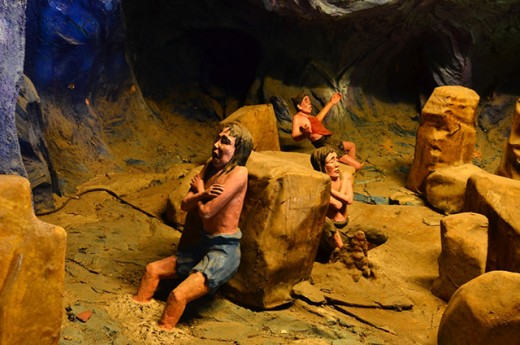
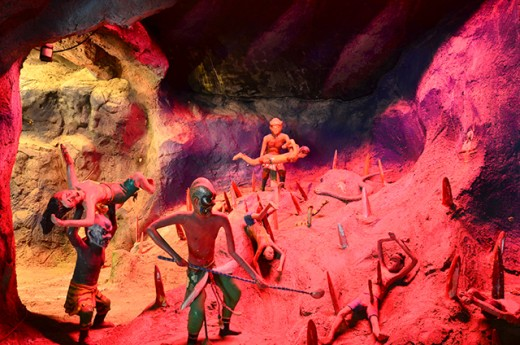
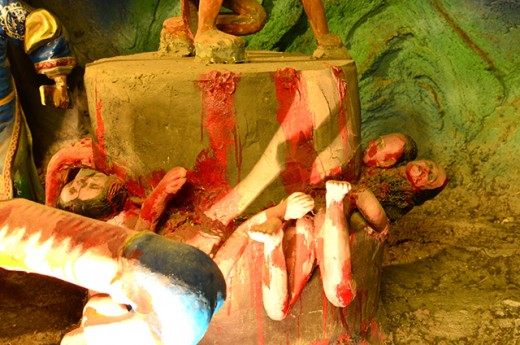
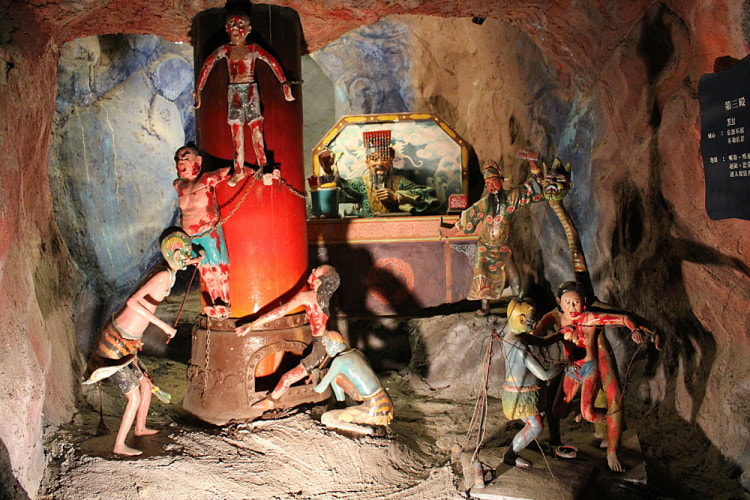
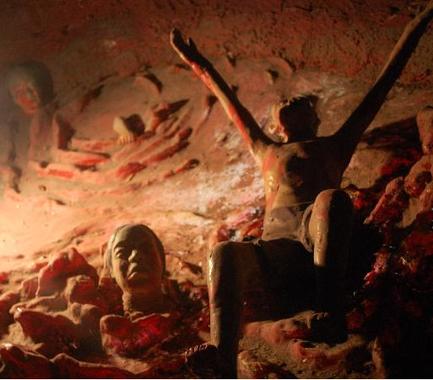
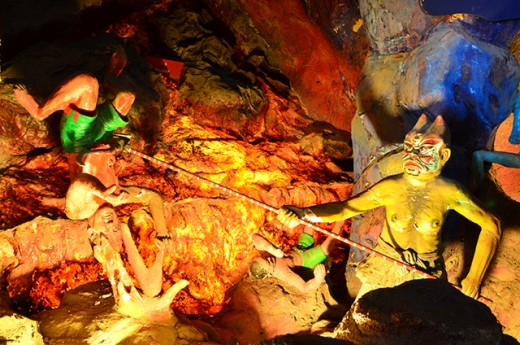
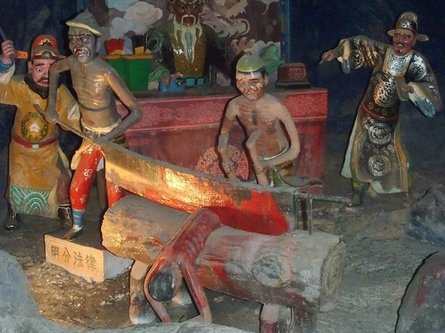
The understanding of Hell is not new.  Many cultures share this view of Hell and even make statues in the olden days to show people what Hell is.  In Singapore, there is a place called Haw Par Villa where Hell is clearly represented and believed in one of the religion called Buddhism.  Buddhism originated from India may not have Hell originally. However, the Chinese people had some idea of Hell in about 1200 BC. When Buddhism came to China, the Chinese people included Hell in this religion.  
When the Chinese people migrated to Singapore, they brought Buddhism and Hell idea to Singapore.

The pictures below are taken from the Haw Par Ville in Singapore.

Picture
Picture
Picture
Picture
Picture
Picture
Picture
Picture
Picture
Picture
Picture
Picture
Picture
Picture
Picture
Picture
Picture
Picture
Picture
The Bible Timeline
Bible Summary
Life of Joseph
Childhood of Jesus
Heaven
Heavenly Signs 2017
Prayer

Chinese

Chinese Language Origin
Ancient Languages
Contact
Satan
Satan in Human History
Forgery in Torah
Copyright © 2017
  • Home
  • prophecies
  • Heaven
  • Hell
  • Born Again
  • Rapture
  • Left Behind
  • Learning to Love
  • Jesus
  • God Calendar
  • The Bible timeline
  • Armor of God
  • CREATION VS EVOLUTION
  • Anti-Christ
  • Bible Study
  • HUMOR